• Home
  • About
  • Blog
  • Insights
  • FAQ
Menu

Out-Thinking Parkinson's

Progressive Symptom Reduction Strategies for Parkinson's Disease
  • Home
  • About
  • Blog
  • Insights
  • FAQ

Update on Light Therapy for Parkinson's Disease

December 29, 2025

Exploring Light-Based Innovation

A Guest article by Toine Schoutens, Propeaq

At Propeaq, we have always taken an interest in emerging ideas that challenge conventional thinking and offer new hope for people living with Parkinson’s disease (PD). In Gary’s earlier blog posts back in 2018, he discussed early-stage research into light-based therapies and their potential role in supporting brain health. At the time, this was a developing field with promising theories, small studies, and many unanswered questions.

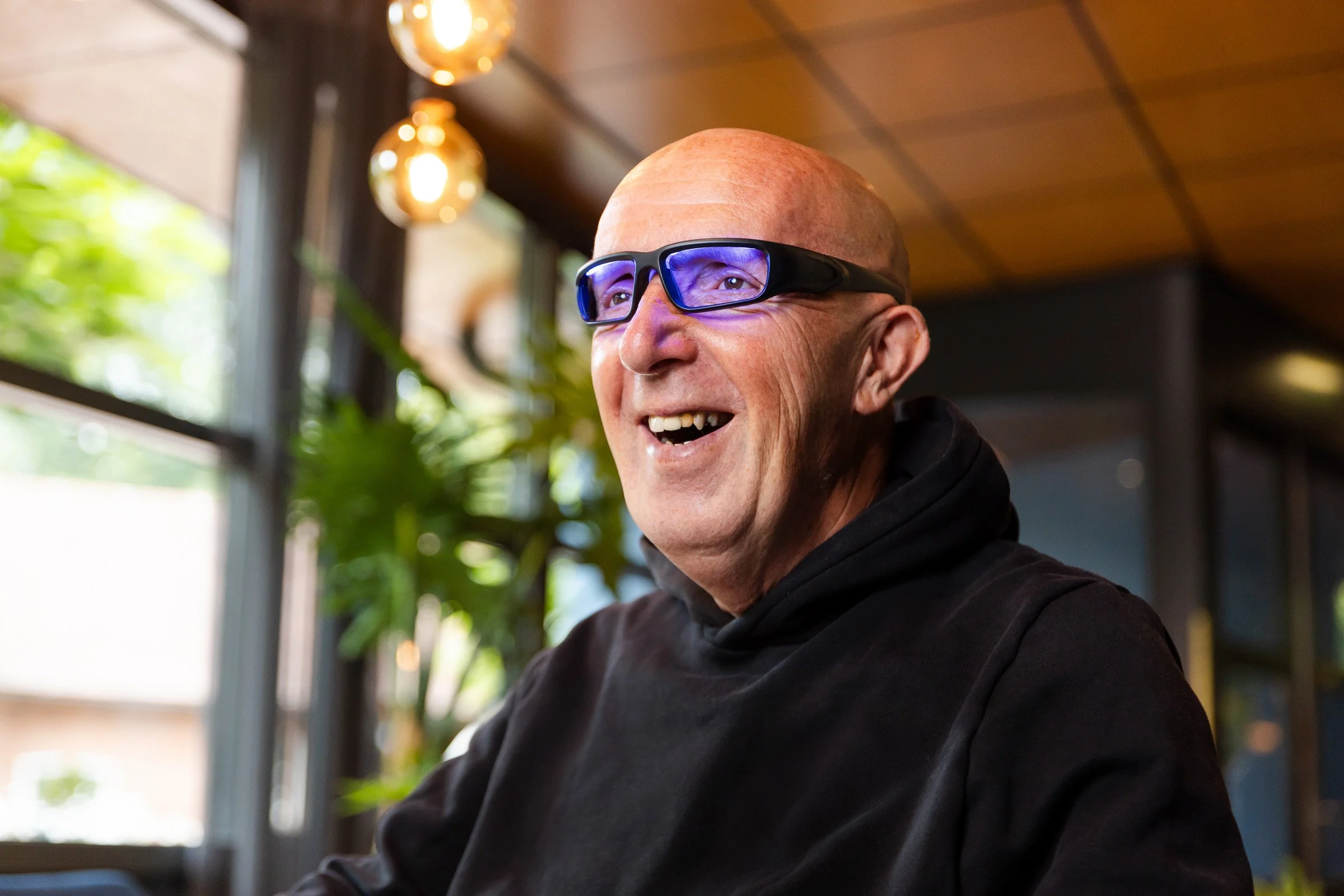
Several years on, that conversation is evolving and one technology that continues to attract attention is our wearable technology, in the form of light glasses. Light glasses are a type of light therapy device, ours are using blue light, delivered through the eyes. The idea behind this approach is that specific wavelengths of light may help support the sleep/wake rhythm which is often disrupted in people with Parkinson’s.

Unlike medications and other, invasive treatments, light glasses are:

• Minimally intrusive;

• Designed for home use;

• Used for short, regular sessions, mostly 2 x 60 minutes daily (directly on wakening and then again 11 hours after awakening);

For people with Parkinson’s, this simplicity and low treatment burden are important considerations,

Parkinson’s Disease is complex, affecting movement, sleep, mood and cognition. While medication remains essential, many people with PD are interested in complementary approaches that may support quality of life alongside standard care.

Research into light therapy suggests it may:

• Support a stable sleep/wake rhythm;

• Reduce sleepiness during daytime;

• Improves mood.

These mechanisms were already being explored when Gary wrote about light therapy in 2018. Since then, interest in this field has grown, with more structured studies and better-designed trials.

When we first covered light-based approaches, the evidence supporting their use, whilst highly encouraging, was still fairly limited and largely exploratory in nature. Early users reported encouraging personal experiences, but larger studies were still needed.

In 2019 a team from Radboud University in the Netherlands, led by Prof. Bas Bloem, a renown name in the field of Parkinson research, published the first study using Propeaq glasses, entitled: “Blue Light Therapy Glasses in Parkinson’s Disease Patients’ Experience”,

Things have moved on apace since then, and today, we are seeing:

• Improved device design and consistency;

• Greater clinical interest in non-pharmacological interventions;

• A clearer focus on measurable outcomes such as motor symptoms, sleep, fatigue, and cognition.

Most importantly, a new clinical study was conducted, using our glasses, under Prof. Bloem. The results have been submitted as a science journal article, currently under review. While full data must always be reviewed carefully and independently, early indications suggest meaningful improvements in symptoms for some participants using Propeaq light glasses as part of a structured protocol.

If the forthcoming study confirms these early signals, Propeaq glasses could represent:

• A valuable adjunctive therapy alongside medication;

• A self-managed option that empowers people with PD;

• A further step toward personalised, non-invasive care.

It is important to stress that light therapy is not a cure for Parkinson’s disease. However, Parkinson’s is increasingly understood as a condition that benefits from multi-layered management, combining medication, exercise, lifestyle interventions and emerging technologies. In the video below, Prof. Bloem discusses these types of approaches. He mentions blue light therapy and references the specific trial, which he hopes will be published soon, at approximately the 43:49 mark of the video.

We believe in being both open-minded and evidence-led. New ideas deserve attention, but also careful evaluation. The anticipated study into Propeaq light glasses is an important moment for the Parkinson’s community, and we look forward to examining the results with Gary in detail once they are published.

For those who remember Gary’s posts from 2018, it is encouraging to see how far this area of research has come. What began as a novel concept is now approaching a level of scientific maturity that could genuinely influence care options.

As always, anyone considering new therapies should discuss them with their healthcare professional and view them as part of a broader, personalised approach to living well with Parkinson’s disease.

Propeaq glasses are available in the UK here.

In Assistive Technology, Therapies, Video Tags Light Therapy, Research, News
Dopamine's Role and Parkinson's Disease →
No results found

ABOUT

Out-Thinking Parkinson's
Out-Thinking Parkinson's Research

 Join my Facebook Group

Follow me on substack:

BLOG

  • Re-thinking Movement
  • Digest
  • People
  • Mental Health
  • Diet & Supplements
  • Therapies
  • Toys
  • Exercise
  • Video
  • Assistive Technology
  • Music
  • Biography
  • Brain Science
  • Books
Parkinson's Disease Carousel: Original Articles and Ideas
December 29, 2025
Update on Light Therapy for Parkinson's Disease
December 29, 2025
December 29, 2025
July 20, 2025
Dopamine's Role and Parkinson's Disease
July 20, 2025
July 20, 2025
June 6, 2025
Waking Up the Senses and Parkinson's Disease
June 6, 2025
June 6, 2025
February 19, 2025
The Nervous System and Parkinson's Disease
February 19, 2025
February 19, 2025
September 19, 2024
Hope and Parkinson's Disease
September 19, 2024
September 19, 2024
August 3, 2024
DAT Scans and Parkinson's Disease
August 3, 2024
August 3, 2024
June 23, 2024
Dopamine Breakdown and Parkinson's Disease: Part 2
June 23, 2024
June 23, 2024
May 3, 2024
Stuck on Pause with Parkinson's Disease
May 3, 2024
May 3, 2024
April 10, 2024
Dopamine Breakdown and Parkinson's Disease: Part 1
April 10, 2024
April 10, 2024
January 2, 2024
Fright and Parkinson's Disease
January 2, 2024
January 2, 2024
September 16, 2023
Acetylcholine, Dopamine and Parkinson's Disease
September 16, 2023
September 16, 2023
July 24, 2023
Sleep and Parkinson's Disease, Part 2
July 24, 2023
July 24, 2023
June 4, 2023
Emotional Armouring and Parkinson's Disease
June 4, 2023
June 4, 2023
April 2, 2023
Histamine, Allergies and Parkinson's Disease
April 2, 2023
April 2, 2023
February 8, 2023
Fascia Decompression and Parkinson's Disease
February 8, 2023
February 8, 2023
December 30, 2022
Lack of Oxygen to the Brain in Parkinson's Disease
December 30, 2022
December 30, 2022
December 13, 2022
Constipation and Parkinson's Disease
December 13, 2022
December 13, 2022
October 19, 2022
The Endocannabinoid System and Parkinson's Disease
October 19, 2022
October 19, 2022
August 21, 2022
Tremors and Parkinson's Disease
August 21, 2022
August 21, 2022
June 29, 2022
The Neck and Parkinson's Disease, Part 2
June 29, 2022
June 29, 2022
May 17, 2022
Reducing Stress and Parkinson's Disease
May 17, 2022
May 17, 2022
April 7, 2022
Thiamine and Parkinson's Disease
April 7, 2022
April 7, 2022
March 17, 2022
Stress, Situations, Symptoms and Parkinson's Disease
March 17, 2022
March 17, 2022
February 18, 2022
Early Retirement and Parkinson's Disease
February 18, 2022
February 18, 2022
February 3, 2022
Survival Instincts and Parkinson's Disease
February 3, 2022
February 3, 2022
December 13, 2021
Feeling Trapped and Parkinson's Disease
December 13, 2021
December 13, 2021
November 4, 2021
Motivation, Pleasure, Pain and Parkinson's Disease
November 4, 2021
November 4, 2021
October 2, 2021
Dopamine Cell Receptors and Parkinson's Disease
October 2, 2021
October 2, 2021
August 15, 2021
Dopamine and Parkinson's Disease
August 15, 2021
August 15, 2021
July 26, 2021
Visual Cues and Parkinson's Disease
July 26, 2021
July 26, 2021

insights

  • Person with PD
  • Caregiver
  • Reader
  • Author
  • Therapist
Testimonials Carousel: What People Say
March 13, 2025
Coloring with Parkinson's
March 13, 2025
March 13, 2025
November 28, 2024
Very Encouraging and Refreshing
November 28, 2024
November 28, 2024
April 19, 2024
Stuck on Pause
April 19, 2024
April 19, 2024
August 12, 2023
Photobiomodulation or Red Light Therapy
August 12, 2023
August 12, 2023
July 7, 2022
Tremors Reduced
July 7, 2022
July 7, 2022
March 29, 2022
Accessible Knowledge
March 29, 2022
March 29, 2022
October 19, 2021
Staying Positive
October 19, 2021
October 19, 2021
July 28, 2021
Suggestions for Exploration
July 28, 2021
July 28, 2021
June 20, 2021
Educative Posts
June 20, 2021
June 20, 2021
March 24, 2021
Parallels with Trauma
March 24, 2021
March 24, 2021
February 4, 2021
Correcting Dysfunctional Sleep
February 4, 2021
February 4, 2021
October 27, 2020
REM Sleep Behaviour Disorder
October 27, 2020
October 27, 2020
August 11, 2020
Yoga Therapy
August 11, 2020
August 11, 2020
November 27, 2019
Strategies of Recovery
November 27, 2019
November 27, 2019
September 3, 2019
Applications of Polyvagal Theory
September 3, 2019
September 3, 2019
May 24, 2019
Hope and Inspiration
May 24, 2019
May 24, 2019
February 7, 2019
Headed in the Right Direction
February 7, 2019
February 7, 2019
September 10, 2018
Husband Diagnosed
September 10, 2018
September 10, 2018
September 10, 2018
Making Changes
September 10, 2018
September 10, 2018
June 21, 2018
Craniosacral Therapy
June 21, 2018
June 21, 2018
May 27, 2018
Music is Medicine
May 27, 2018
May 27, 2018
April 26, 2018
Social Isolation
April 26, 2018
April 26, 2018
March 31, 2018
From Malta
March 31, 2018
March 31, 2018
March 6, 2018
Impactful Discoveries
March 6, 2018
March 6, 2018
March 6, 2018
Co-Regulation
March 6, 2018
March 6, 2018
February 6, 2018
Outstanding Information
February 6, 2018
February 6, 2018
January 21, 2018
Slowing Down Progression
January 21, 2018
January 21, 2018
October 25, 2017
Exploring All the Potential Causes
October 25, 2017
October 25, 2017
September 10, 2017
Can-Do Attitude
September 10, 2017
September 10, 2017
August 28, 2017
Connecting the Dots
August 28, 2017
August 28, 2017

©2017-2026 Gary Sharpe, ©2016 Gary Sharpe and Deb Helfrich

Contact Us

Medical Disclaimer

Website Terms & Conditions